
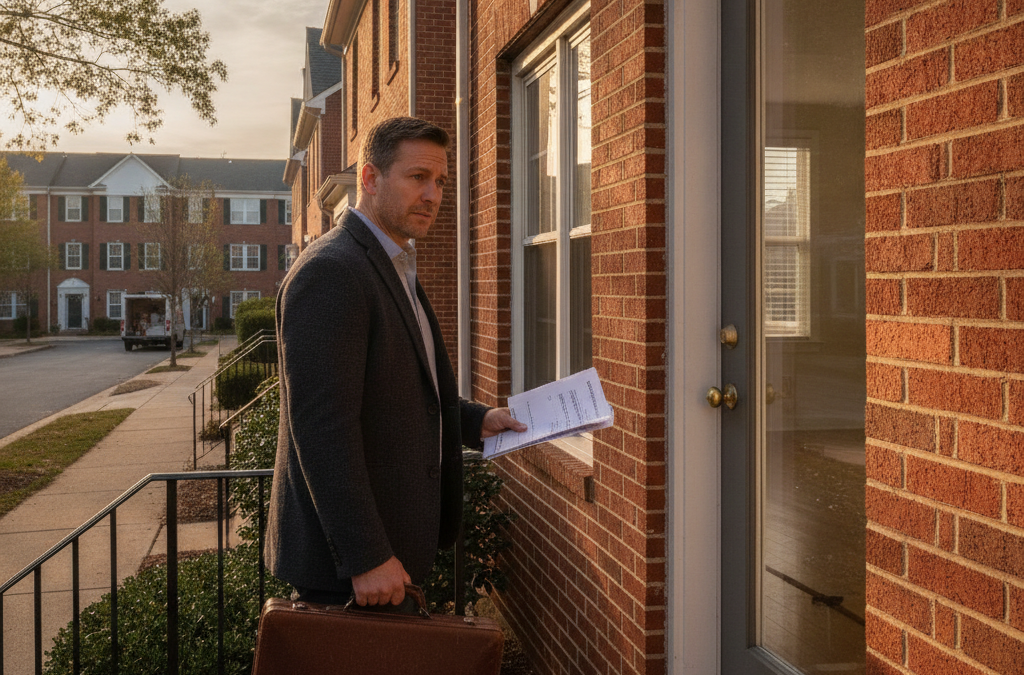
How to Handle a Tenant Who Stops Paying Rent in Alexandria Without Making a Costly Mistake
When a tenant stops paying rent in Alexandria, the clock starts immediately — and the decisions you make in the first few days will either protect your investment or make a bad situation significantly worse. Virginia law gives landlords a clear process to follow, but it also punishes landlords who skip steps, act too fast without proper notice, or say the wrong thing in writing. If you own a rental property in Alexandria, Arlington, Springfield, or anywhere in Fairfax County and you’re staring at a missed payment right now, here is exactly what you need to know before you do anything else.
Step One: Don’t Panic, But Don’t Wait Either
A missed rent payment on the 1st doesn’t automatically mean your tenant is gone for good. Life happens — a bank account issue, a payroll delay, a miscommunication about how rent is paid. Your first move is a calm, written follow-up: a text or email noting that rent hasn’t been received and asking the tenant to confirm when it will be. Keep this professional and document it. What you are doing at this stage is establishing a paper trail.
If rent is still missing by day 5 — especially after any grace period defined in your lease — stop waiting. The longer you delay, the deeper into the month you get, and every additional week of non-payment is money you cannot recover once the tenant is gone. This is one of the most common and expensive mistakes self-managing landlords make.
Understanding Virginia’s Pay or Quit Notice Requirements
Virginia law requires that before you can file for eviction based on non-payment of rent, you must serve the tenant with a written 5-Day Pay or Quit Notice. This notice informs the tenant they have five days to pay all outstanding rent in full or vacate the property. If they do neither within that window, you can proceed to file an Unlawful Detainer action in the General District Court that has jurisdiction over your property’s location.
For properties in the City of Alexandria, that is the Alexandria General District Court. For properties in Fairfax County — covering areas like Springfield, Burke, Franconia, and Annandale — filings go through the Fairfax County General District Court. The courts are different, the filing fees differ slightly, and the scheduling timelines can vary. If you own rentals in both jurisdictions, you already know this gets complicated fast.
A few things Virginia landlords often get wrong on the Pay or Quit notice itself:
- Using an incorrect or outdated notice form
- Listing the wrong amount owed (late fees must be handled correctly under the Virginia Residential Landlord and Tenant Act)
- Serving the notice incorrectly — hand delivery, posting, and mailing rules all apply depending on the situation
- Accepting a partial payment after serving the notice, which can reset the clock under certain conditions
Any of these errors can result in a judge dismissing your case on the first court date, which means you go back to square one and lose another month.
What Happens If You Accept Partial Rent — The Trap Most Landlords Fall Into
This deserves its own section because it trips up landlords repeatedly, and it’s a topic that most competitor property management websites in the Northern Virginia area handle either vaguely or not at all.
Under Virginia law, if you accept any rent payment from a tenant after you have already served a Pay or Quit notice, you may be waiving your right to proceed with that eviction filing. The law is nuanced — it depends on the language in your lease, the amount accepted, and whether you provided a written statement indicating that acceptance does not waive your right to evict. Without that specific written language, a partial payment you accept in good faith can force you to restart the entire notice-to-court process.
This is not a hypothetical edge case. It happens regularly with landlords who are trying to work with a tenant in financial difficulty. You want to be flexible and reasonable — that’s understandable. But flexibility without documentation can cost you an additional 30 to 60 days of lost rent and legal fees. If you’re going to accept anything, put the terms in a written payment agreement signed by both parties before the money changes hands.
The Court Process in Fairfax County and Alexandria: What to Realistically Expect
Once you file an Unlawful Detainer, the court will schedule a hearing date — typically within three to four weeks of filing, though this varies. On the court date, if the tenant doesn’t appear, you will likely receive a default judgment. If they do appear, the judge will hear both sides and rule on possession and any rent owed.
If you win, you receive a Writ of Possession, which is issued by the court and executed by the sheriff’s office. The sheriff’s office schedules the physical lockout — in Fairfax County and Alexandria, this step has historically added another one to three weeks to the timeline depending on scheduling volume.
From first missed payment to actual possession of your property back, you are realistically looking at six to ten weeks minimum if everything goes smoothly. If anything in the notice or filing process is challenged, it takes longer. That’s two to three months of mortgage payments, HOA fees, insurance, and utilities potentially coming out of your pocket with no offsetting rental income.
Military Tenants Near Fort Belvoir: What Alexandria Landlords Need to Know
If you own rental property in Franconia, Kingstowne, or the Springfield corridor, there’s a significant chance you’ve had — or will have — a military tenant. The Servicemembers Civil Relief Act (SCRA) gives active-duty military personnel specific protections that override standard Virginia landlord-tenant law in some situations. A service member who receives Permanent Change of Station (PCS) orders or deployment orders has the right to terminate a lease early with proper notice, even if the lease doesn’t include that clause.
This is not an eviction situation — it’s a separate legal framework that you must understand before you send any notices or make demands. Mishandling an SCRA situation can expose you to federal liability. If you’re not certain whether your non-paying tenant has active military status, find out before you serve notice.
What Good Property Management Prevents — Before It Starts
Most non-payment situations aren’t random. They’re the downstream result of decisions made before the tenant ever moved in: weak screening standards, income verification that wasn’t actually verified, skipped landlord reference calls, or lease language that left gray areas around due dates and grace periods.
Thorough upfront screening — credit, criminal history, eviction history, income at 3x monthly rent, and verified landlord references — doesn’t eliminate risk, but it dramatically reduces the likelihood that you’re in this situation in the first place. For landlords who don’t have time to manage the process themselves, professional tenant placement handles this systematically across every applicant, every time, without shortcuts.
Frequently Asked Questions: Tenant Not Paying Rent in Alexandria and Northern Virginia
Can I change the locks or turn off utilities if a tenant stops paying rent in Virginia?
No. Virginia law strictly prohibits self-help eviction tactics including changing locks, removing doors or windows, or shutting off utilities to force a tenant out. Doing any of these things exposes you to significant legal liability, regardless of how far behind the tenant is on rent. You must follow the court process.
How long does an eviction take in Fairfax County or Alexandria?
From the date of the first Pay or Quit notice through the sheriff’s execution of a Writ of Possession, the realistic timeline is six to ten weeks when there are no procedural complications. Contested cases, filing errors, or court scheduling delays can extend this considerably.
What if my tenant pays some of the rent owed — should I accept it?
Only accept partial payment if you have a signed, written payment agreement in place that explicitly states acceptance does not waive your right to pursue eviction for the remaining balance. Without that documentation, accepting partial payment can invalidate your pending eviction filing in Virginia and force you to restart the notice process.
Can a property manager handle the eviction process for me?
A property management company handles the notice process, court filing coordination, and communication with tenants on your behalf. For the actual court hearing, most property managers work alongside an attorney when one is needed. Having a professional manage the process reduces the risk of procedural errors that delay or dismiss your case.
Does it matter if my rental is in the City of Alexandria versus Fairfax County?
Yes. The City of Alexandria is an independent city with its own General District Court. Fairfax County — covering Springfield, Burke, Franconia, Annandale, and surrounding areas — has its own court and procedures. Filing in the wrong court or using jurisdiction-incorrect forms is an avoidable but surprisingly common mistake for landlords managing properties across both jurisdictions.
The Bottom Line for Alexandria Landlords
A tenant who stops paying rent is a financial and legal problem at the same time. The process is manageable if you follow it correctly from day one — but there are enough specific steps, local court differences, and legal nuances across Alexandria, Arlington, and Fairfax County that doing this wrong is genuinely easy. Most of the time, the landlords who lose the most money aren’t the ones with the worst tenants. They’re the ones who made a procedural error early in the process that cost them an extra month or two in court.
If you’d rather not navigate this yourself — or if you want to prevent it from happening in the first place — Central Properties Management & Sales manages rental properties across Alexandria and Northern Virginia with transparent fees, no long-term contracts, and a process built around protecting your investment from day one. Contact us to schedule a free consultation and find out what professional management actually looks like for your specific property.