
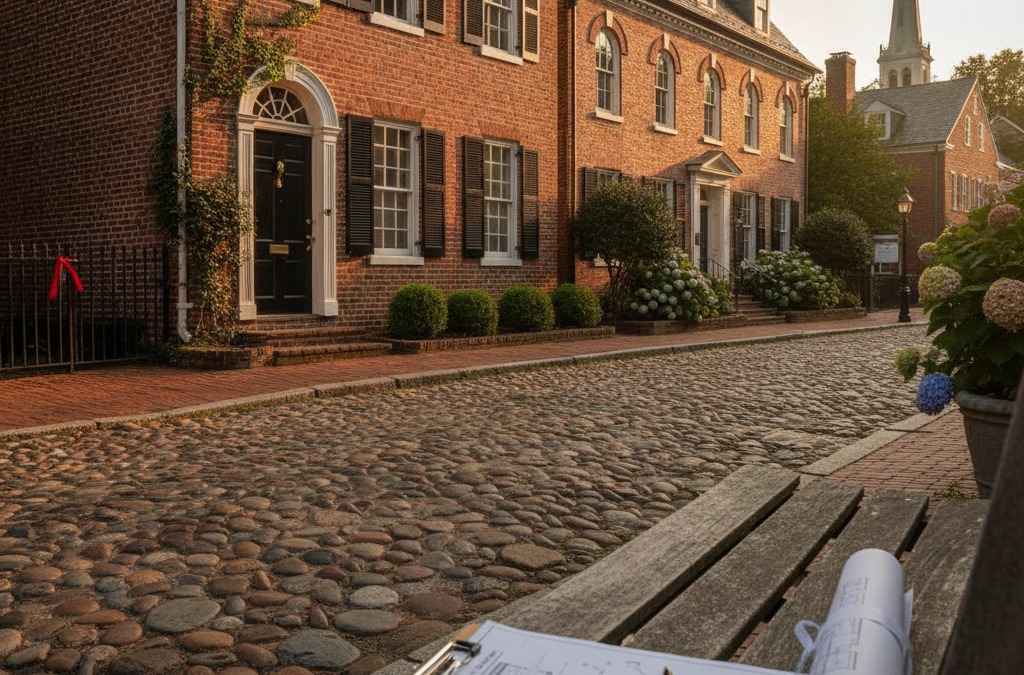
What Landlords in Old Town Alexandria Should Know Before Renting Out a Historic Property
If you own a rental property in Old Town Alexandria, you’re not managing a generic unit in a suburban complex. You’re managing a piece of a legally protected historic district — and that comes with a specific set of obligations that most property management articles, including those published by several local competitors, barely acknowledge. Before you list that Federal-style rowhouse or converted 19th-century townhouse, here’s what you actually need to understand about compliance, maintenance, tenant expectations, and what can go wrong if you skip any of it.
Old Town’s Historic District Rules Apply to Landlords, Not Just Owners Who Live There
The Old Town Alexandria Historic District is one of the largest and best-preserved in the country. The City of Alexandria’s Board of Architectural Review (BAR) has authority over exterior changes to properties within the district. That authority does not pause because you’re a landlord renting the property to someone else.
This matters for rental properties in a few direct ways:
- Exterior repairs and replacements require BAR approval. If a tenant causes damage to the exterior — or if routine wear requires you to replace windows, repaint, repair siding, or change out doors — you may need to apply for a Certificate of Appropriateness before any work begins. Using the wrong material or color can trigger a violation.
- Your vendors need to know the rules. A general contractor who works primarily in Fairfax County or Arlington may not be familiar with historic district requirements. If they use non-compliant materials on an exterior repair, you’re the one responsible.
- Signage restrictions affect your listing. Physical for-rent signs on the property may be restricted depending on the specific block and structure. This is minor but worth knowing before you assume you can plant a yard sign.
The interior of your property is generally not subject to BAR jurisdiction, but if your lease allows tenants to make any alterations — even small ones that touch exterior-facing elements like window treatments visible from the street — you’ll want your lease language to be specific.
HOA and Condo Association Rules Add Another Layer in Old Town
Many properties in Old Town sit within condo associations or historic rowhouse communities that have their own governing documents layered on top of city historic district requirements. If you own a condo in one of the restored buildings along King Street, Prince Street, or the waterfront corridor, your HOA likely has rules about:
- Tenant approval or registration requirements
- Move-in and move-out scheduling and elevator access
- Lease term minimums (some Old Town associations prohibit short-term rentals entirely)
- Pet restrictions and parking allocation for tenants
- Who is responsible for common area damage caused by tenants
These aren’t hypothetical scenarios. If your tenant violates an HOA rule and the association fines the unit owner — that’s you — and your lease doesn’t clearly pass through responsibility, you may have limited recourse. A property manager who handles condo and townhouse management in Old Town needs to know how to read association documents, communicate with the board, and structure lease addenda that hold tenants accountable for association violations. Learn more about how Central Properties handles condo and townhouse management for exactly these situations.
Maintenance in Historic Buildings Is a Different Animal
Older structures in Old Town — particularly those built before 1940 — present maintenance challenges that newer construction in areas like Carlyle or Potomac Yard simply don’t have. As a landlord, you should go in with clear expectations:
- HVAC systems are often cramped or retrofitted. Original rowhouses weren’t designed for modern duct systems. Replacements and upgrades can be more expensive and complicated than a standard residential job.
- Plumbing and electrical may be original or partially updated. If your property has had multiple partial renovations over the decades, you may have mixed-era systems that require careful vendor selection.
- Mid-Atlantic weather hits old buildings hard. The freeze-thaw cycles that hit the DC region every winter stress brick mortar, foundation walls, and older window frames differently than they stress modern construction. Annual inspections aren’t optional — they’re how you catch a $400 tuckpointing issue before it becomes a $6,000 structural repair.
- Lead paint and historic materials compliance. Properties built before 1978 require lead paint disclosure. Some historic buildings also have materials — like original plaster or period-specific finishes — that require careful handling during repairs.
Working with a property manager who has a pre-qualified local vendor network and a defined maintenance approval process makes a real difference here. At Central Properties, we require owner approval on any repair above $300 and route historic property work through vendors familiar with Old Town-specific requirements.
Who Rents in Old Town — and What They Expect
Old Town attracts a specific tenant profile: DC-area professionals, government employees, attorneys, consultants, and federal contractors who want walkability, character, and proximity to the DC corridor. These tenants often have strong credit and income, and they tend to stay longer when the property is well-maintained and professionally managed.
That said, they also have higher expectations. A poorly coordinated maintenance response, a confusing move-in process, or a landlord who is hard to reach will generate negative reviews and early vacancies in a neighborhood where word-of-mouth matters. Tenant placement in Old Town should prioritize applicants with verifiable income of at least three times the monthly rent, clean rental history, and references from prior landlords — not just whoever applies first.
Del Ray, just north of the historic district, draws a similar but slightly younger and more family-oriented tenant base. If your property sits at the edge of Old Town or straddles the Del Ray boundary, your marketing and screening approach may need to reflect that distinction. See how Central Properties approaches tenant placement for properties across the Alexandria market.
What Most Property Management Guides Don’t Tell You About Historic Properties
Here’s the gap that most articles — including those from several competitors serving the Northern Virginia market — leave wide open: they treat all Alexandria rentals as functionally identical. A condo in Eisenhower Valley and a 200-year-old rowhouse in Old Town are not the same management challenge, and a generic checklist won’t cover both.
Specifically, what most guides skip entirely:
- How to structure a lease that accounts for BAR compliance obligations and passes exterior alteration liability to tenants appropriately
- How to document the property’s pre-existing historic condition at move-in, so you’re protected at move-out when a tenant disputes whether a crack in the plaster was pre-existing
- How to coordinate emergency maintenance on a historic property at 11pm when standard repair materials may not be BAR-compliant
- How to price rent accurately when your property’s charm and location are genuine differentiators that comparable-based pricing tools often undervalue
If you’re working with a property manager who hasn’t addressed any of these points, it’s worth asking directly how they handle them. A free consultation with Central Properties is a good place to start those questions.
Frequently Asked Questions: Renting a Historic Property in Old Town Alexandria
Do I need city approval before making repairs to my Old Town rental property?
For exterior changes — including window replacements, painting, roofing, or any alteration to the building’s facade — yes. The City of Alexandria’s Board of Architectural Review issues Certificates of Appropriateness for properties within the historic district. Interior repairs generally do not require BAR approval, but confirm with the city if you’re uncertain about a specific project.
Can my tenant make interior modifications to a historic property?
Your lease controls this. Most landlords in Old Town prohibit tenant alterations without written approval. If your tenant wants to mount shelves, paint walls, or make any modification — even interior — your lease should require prior written consent and specify restoration obligations at move-out.
How does property management pricing work for a condo or townhouse in Old Town?
For condos and townhouses with HOA coordination, Central Properties charges 10% of monthly rent. This reflects the additional work involved in managing association compliance, board communication, and vendor coordination within HOA-governed communities. There are no hidden fees or markups on top of that rate.
Are short-term rentals allowed in Old Town Alexandria?
Alexandria has regulations governing short-term rentals (platforms like Airbnb or VRBO), and many Old Town condo associations have their own prohibitions on top of city rules. You should review your HOA documents and the City of Alexandria’s short-term rental ordinance before listing on any short-term platform. Standard long-term leases (12 months) are the default approach for Old Town rental properties we manage.
What should I look for in a property manager if my rental is in the Old Town historic district?
Look for a manager with direct experience handling BAR-compliance requirements, a vendor network familiar with historic construction, and the ability to structure HOA-compliant leases for condo or townhouse properties. Ask specifically how they handle exterior repair coordination and what their process is for move-in documentation on older buildings. Generic answers are a red flag.