
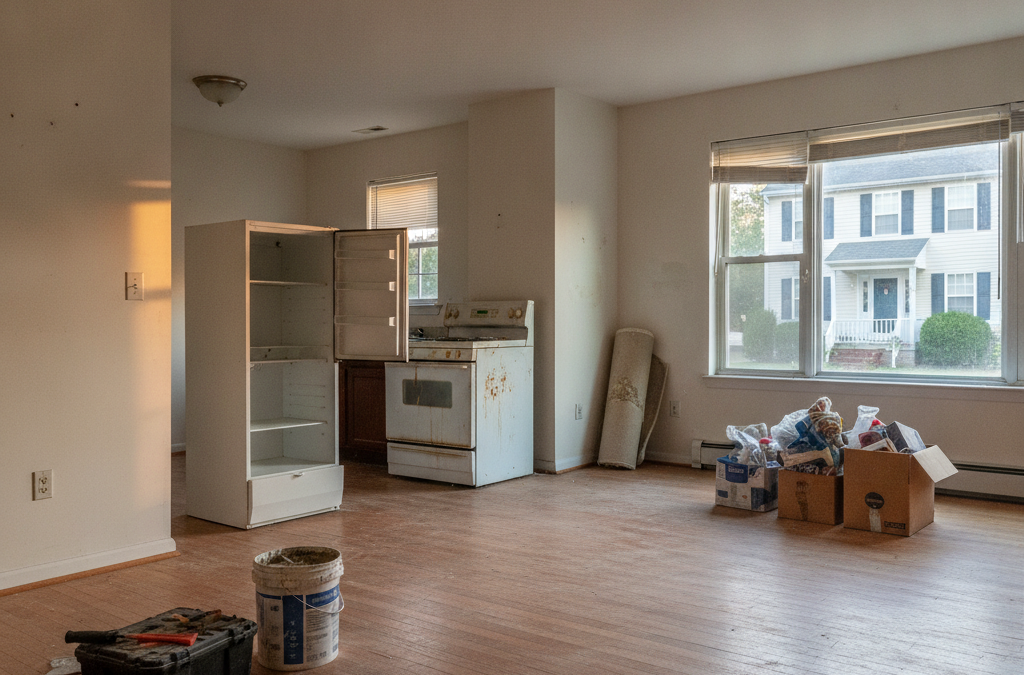
What Landlords in Fairfax County Get Wrong About Rent-Ready Repairs Before a Tenant Moves In
The most common mistake Fairfax County landlords make between tenants isn’t skipping repairs entirely — it’s deciding which repairs are optional. A property that looks acceptable to you after a move-out walkthrough does not necessarily look acceptable to a qualified tenant comparing it to three other units. If your rent-ready process is mostly “touch up the walls, shampoo the carpet, and call it done,” you’re likely leaving vacancy days on the table and setting yourself up for move-in complaints that undermine the tenant relationship before it starts.
This guide breaks down what rent-ready preparation actually involves for rental properties in Northern Virginia — what to prioritize, what it realistically costs, where landlords consistently cut too deep, and what a professionally managed turnover looks like versus a rushed DIY one.
Why Rent-Ready Prep Gets Underestimated in Northern Virginia
Landlords in markets like Springfield, Burke, Kingstowne, and Lorton often underestimate turnover costs because they’re anchored to what they spent when the property was first rented. That number was lower — and it was lower because the property was newer, the systems hadn’t cycled through multiple tenants, and the work was done without time pressure.
A second or third turnover is a different situation. The HVAC filter hasn’t been changed in eight months. The kitchen faucet has a slow drip that nobody reported. The bathroom caulk is separating. The carpet that looked fine when the last tenant moved in looks flat and stained now that they’ve left. None of these are catastrophic — but all of them slow your lease-up, lower your achievable rent, and create friction with an incoming tenant who expected move-in-ready condition.
The Mid-Atlantic climate also accelerates wear in ways that catch landlords off guard. Hot, humid summers and cold winters stress HVAC systems, cause paint to expand and crack around windows and doors, and create moisture issues in bathrooms and basements that a quick clean won’t address. If your property sat vacant through even one summer without humidity control, you may have issues that aren’t visible until a tenant reports them.
What “Rent-Ready” Actually Means — and What It Doesn’t
Rent-ready doesn’t mean perfect. It means the property is clean, functional, and in a condition you could defend in writing if a tenant raised a complaint on day one. That standard has three components:
- Functional systems: HVAC, plumbing, electrical, appliances, and water heater must all be working and recently serviced. A tenant should not have to report a broken garbage disposal or a tripped GFCI outlet in the first week. Those are landlord discoveries that should happen before the lease begins.
- Clean surfaces and finishes: Professional cleaning (not a tenant’s version of “broom clean”), freshly painted walls where necessary, and floors that are either professionally cleaned or replaced if they’re past the point of recovery. A carpet that photographs poorly will hurt your listing before you ever get a showing.
- Documented condition: A timestamped, photo-documented move-in inspection report signed by the tenant at the start of the lease. Without this, you have no baseline to compare against at move-out — and in Virginia, that makes security deposit deductions difficult to enforce.
What rent-ready does NOT mean: everything replaced or cosmetically upgraded. There’s a difference between a wall that needs paint and a wall that needs a $400 patching job from tenant-caused damage. Your job before a new tenant is to get the property to a defensible, marketable standard — not to absorb costs that belong to the departing tenant.
The Repairs Landlords in Annandale and Lorton Most Often Skip — and Regret
HVAC Service
A filter swap is not an HVAC service. Between tenants is the right time to have a technician inspect the system, clean the coils, check refrigerant levels, and confirm the unit is sized and functioning properly for the square footage. In Northern Virginia, HVAC failure is a habitability issue — not a comfort issue — and a system that was running acceptably in the fall can fail in July or February when demand spikes. A $150 service visit before a tenant moves in is significantly cheaper than an emergency call during a heat advisory when your tenant has no cooling.
Caulk and Grout
Bathroom caulk separates over time and eventually allows water to get behind tile, behind fixtures, and into walls. It photographs badly, looks like deferred maintenance to a prospective tenant touring the unit, and creates actual moisture damage if left long enough. Recaulking tubs, showers, and sinks is a low-cost item — usually under $100 with labor — that has a disproportionate impact on how a property presents.
Smoke and Carbon Monoxide Detectors
Virginia has specific requirements for placement and functionality. These need to be tested at every turnover, and batteries should be replaced as a matter of course. This is a legal compliance item, not an optional one.
Exterior and Entry Condition
For single-family homes in areas like Burke and Springfield, the exterior is the first thing a prospective tenant evaluates — and a property with peeling paint on the trim, a cracked walkway, or a front door that sticks sends an immediate signal about how the property is managed. Fix the small stuff at the entry before you photograph or show the unit.
What Turnover Repairs Typically Cost in Fairfax County
Rough cost ranges for common turnover items in the Northern Virginia market, based on general regional pricing. These will vary by property size, condition, and vendor:
- Professional house cleaning (3BR/2BA): $250–$400
- Carpet cleaning (3BR): $150–$280; replacement (if needed): $1,500–$3,500 depending on square footage and grade
- Interior paint — full repaint (3BR/2BA): $1,800–$3,200 with labor; spot touch-ups: $200–$500
- HVAC service inspection: $100–$200
- Plumbing inspection and minor repairs (drips, running toilets, aerators): $150–$350
- Recaulking bathrooms: $75–$150 per bathroom with labor
- Appliance deep clean: included in professional cleaning or $75–$150 separately
- Smoke/CO detector battery replacement and test: under $50
A typical well-maintained single-family home turnover in Fairfax County runs $800–$2,500 if no major systems need attention and the carpet is salvageable. A property with significant tenant wear — scuffed walls throughout, stained carpet, deferred small maintenance — can run $3,000–$6,000 or more before it’s correctly marketed.
The critical point: most of that higher-end cost should either come from the security deposit or be split between deposit funds and landlord investment where the wear is normal. A professional maintenance coordination process tracks what was documented at move-in so those lines are clear.
Where DIY Turnover Management Breaks Down
Self-managing landlords often handle turnover themselves to save money — and for some experienced owners with local vendor relationships and flexible schedules, that works. But there are two consistent failure points:
Vendor access and scheduling. Getting a cleaner, a painter, a carpet company, and an HVAC tech coordinated within a two-week window — while the property is vacant and costing you rent — requires either pre-established relationships or luck. Most self-managing landlords end up waiting on one vendor while others are ready, and the vacant window stretches from 14 days to 28.
Assessment bias. When you’ve owned a property for years and just completed a stressful move-out, it’s genuinely difficult to walk through and objectively assess what a new tenant will see. A property manager’s job is partly to have that objective eye — and to know what rent-ready looks like at the current price point you’re trying to achieve in your specific submarket.
At Central Properties Management & Sales, our turnover process for full-service managed properties includes a move-out inspection, a written scope of work, coordination with our pre-qualified vendor network, and a move-in inspection with documented photos before the new tenant takes possession. Owners don’t coordinate vendors or chase estimates — that’s our job, and it’s why our average placement timeline runs around 18 days.
A Note on HOA Properties in Kingstowne and Eisenhower Valley
If your rental is in an HOA community — which covers a significant portion of rentals in areas like Kingstowne, Cameron Station, and Eisenhower Valley — your rent-ready checklist has an additional layer. Some HOAs require move-in and move-out inspections by the association, reserved elevator time for moves, or approval of certain exterior modifications. Violating HOA rules during a tenant transition can mean fines that land on the owner, not the tenant. If you’re not familiar with your specific association’s requirements, that’s a gap worth closing before a new tenant signs.
Frequently Asked Questions
How long should it take to get a rental property rent-ready in Fairfax County?
For a well-maintained property with minimal tenant damage, two weeks is a reasonable target if vendors are pre-scheduled. Properties needing carpet replacement, full repaints, or appliance work can take three to four weeks. The sooner you start the move-out inspection and scope of work, the tighter you can keep that window.
Can I charge the outgoing tenant for rent-ready repairs in Virginia?
You can deduct repair costs from the security deposit for damage beyond normal wear and tear. Virginia law requires you to provide an itemized written statement of deductions within 45 days of the tenant’s move-out. Normal wear and tear — minor scuffs, light carpet wear, faded paint — is not chargeable. Damage from neglect or misuse is. A documented move-in inspection is essential for making these deductions stick.
Do I have to repaint between every tenant?
Not necessarily. If walls are in clean, presentable condition, touch-up painting may be sufficient. But if paint is visibly scuffed, marked, or has been patched inconsistently, a full repaint produces a much better result at showings and photos — and may actually reduce your total vacancy time enough to justify the cost.
What’s the $300 owner-approval threshold I’ve heard property managers mention?
At Central Properties, we coordinate repairs and maintenance on your behalf, and we notify you for owner approval on any non-emergency expense over $300. This keeps you informed without requiring you to manage every service call yourself. Emergency repairs that affect habitability — like an HVAC failure or a plumbing leak — are handled immediately with notification to you as quickly as possible.
Is it worth hiring a property manager just for the turnover period?
Some landlords want ongoing management; others want help only at transition. Our tenant placement service covers the marketing, screening, and placement process without requiring a full ongoing management contract. If you want to self-manage the lease but need help getting a qualified tenant in the door quickly, that’s an option worth exploring.
Ready to Stop Guessing What “Rent-Ready” Means for Your Property?
If your rental is turning over — or you want an objective assessment of what it would take to get your property leased quickly at a competitive price in Fairfax County, Alexandria, or the surrounding Northern Virginia market — we’re straightforward to work with. No hidden fees, no long-term contracts you can’t get out of, and no runaround about what we actually do.
Contact Central Properties Management & Sales at 571-470-0300, email us at help@cp-mgt.com, or request a free rental analysis online. We’ll give you an honest assessment of your property’s condition, its market rent, and what turnover would realistically cost and look like under professional management.