
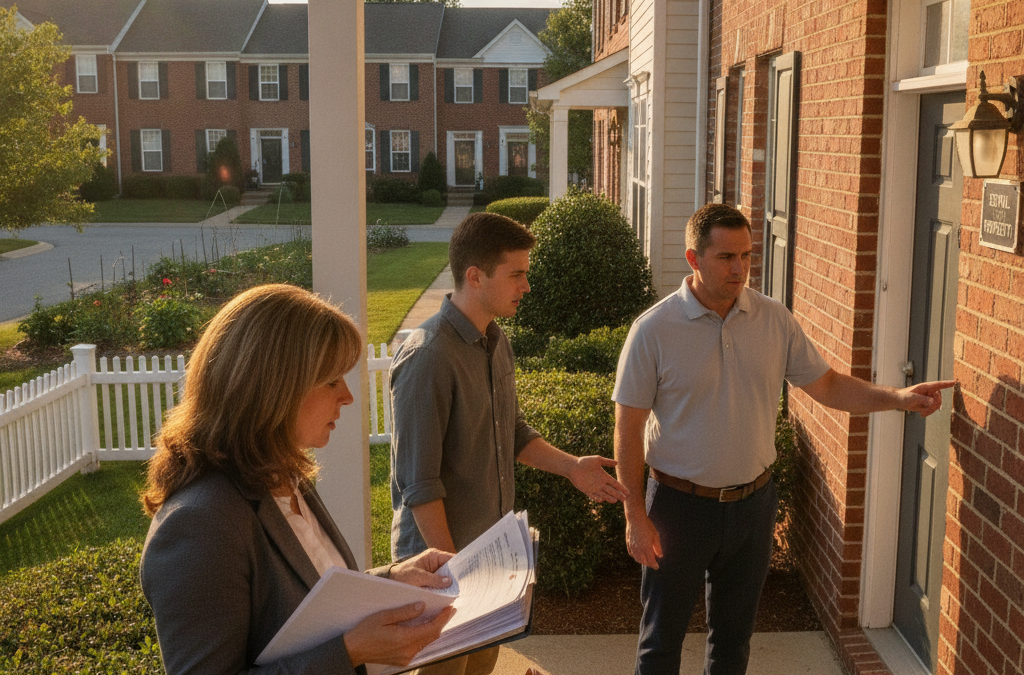
What Happens When Your Alexandria Rental Property Is Inside an HOA — and Your Tenant Breaks the Rules?
If your rental property sits inside a homeowners association in Alexandria — whether it’s a townhouse in Kingstowne, a condo in Eisenhower Valley, or a single-family home in Cameron Station — a tenant who violates HOA rules doesn’t just create friction with the neighbors. Under Virginia law and most HOA governing documents, the unit owner is responsible for ensuring tenants comply with the association’s rules. That means the fine notice comes to you, not to the person who left the trash bins out or parked in a reserved space. Understanding this dynamic before it becomes a problem is one of the most overlooked responsibilities of being a landlord in an HOA community.
Why HOA Violations Are a Bigger Risk for Landlords Than Most People Realize
Most landlords who own inside HOA communities have read through the lease — but fewer have carefully reviewed the association’s governing documents and thought through what happens when a tenant ignores them. In Fairfax County, HOA-governed communities are common, and the associations that manage places like Kingstowne or Cameron Station are not passive. They issue fines, they escalate, and they have the legal authority to pursue the unit owner directly for unpaid assessments or repeated violations. In some cases, if fines go unpaid long enough, the HOA can place a lien on the property.
The violations landlords most frequently get caught off guard by include:
- Unauthorized vehicles or parking in visitor-only spots
- Pets that exceed weight or breed restrictions not disclosed at move-in
- Garbage and recycling bins left out past permitted hours
- Unapproved modifications to the unit or exterior (including satellite dishes, storm doors, or paint colors)
- Noise complaints resulting in formal association action
- Failure to register the tenant with the HOA, which many associations require
That last one catches landlords off guard more than almost anything else. Many HOA communities require owners to formally register any tenant with the management office before or shortly after move-in. Miss that step and you may be in violation before your tenant even unpacks.
The Lease Is Your First Line of Defense — and Most Leases Don’t Go Far Enough
A standard residential lease will include a clause stating that the tenant agrees to comply with all community rules. But a single sentence buried in a form lease is rarely enough in practice. When a violation notice arrives and you ask your tenant about it, “I didn’t know that was a rule” is the most common response — and it’s often genuine.
A better approach is to use an HOA addendum as part of every lease executed in an association-governed community. This addendum should:
- Reference the specific HOA by name and attach a copy of the current rules and regulations
- State clearly that the tenant has received, read, and agrees to be bound by those rules
- Specify that any HOA fines resulting from tenant behavior will be charged back to the tenant as additional rent
- Outline the process by which the landlord will notify the tenant of a violation and the timeframe for curing it
- Address tenant registration requirements with the HOA directly
Without this kind of documentation, recovering an HOA fine from a tenant — even a legitimate one — becomes a dispute. With it, you have a clear, signed agreement that eliminates most of the ambiguity.
What Managing an HOA Rental Actually Requires Day-to-Day
This is the part that most property management firms — especially larger national franchises — tend to underestimate when they take on individual condo or townhouse rentals in Northern Virginia. Managing a rental inside an HOA isn’t just about collecting rent and fixing the occasional maintenance issue. It requires someone who is actively monitoring communications from the association, responding to violation notices promptly, coordinating between the tenant and the board, and ensuring that owner-required registrations and disclosures are completed correctly.
At Central Properties Management, condo and townhouse management is treated as a distinct service category — not just a checkbox on a generic property management agreement. That includes proactive communication with HOA boards, maintaining awareness of rule changes across communities we manage in, and making sure the lease and addenda are specific to each community’s governing documents. When a violation notice comes in, we handle the response and tenant communication directly so it gets resolved fast rather than escalating into a fine that doubles.
A Gap That Most Local Competitors Don’t Address: HOA Tenant Registration Requirements
If you look at the content published by most property management firms serving Alexandria and Fairfax County, you’ll find plenty of general language about HOA compliance — but almost nothing specific about the tenant registration process that many associations require. This is a real operational gap, not just a content one.
In communities like Kingstowne and Eisenhower Valley, associations often require the unit owner to submit the tenant’s name, contact information, vehicle registration details, and sometimes a copy of the lease within a specific window after move-in. Missing this requirement doesn’t just irritate the board — it can void certain tenant privileges (like access to amenity facilities) and put the owner on record as non-compliant. In competitive rental markets like Alexandria, a tenant who finds out they can’t access the community pool because their landlord missed a registration deadline is not going to be a happy tenant at renewal time.
If you’re self-managing or switching management companies, ask specifically: How do you handle HOA tenant registration, and how do you track rule changes across different associations? If the answer is vague, that’s a gap you’ll feel eventually.
Choosing the Right Property Manager for an HOA Community in Alexandria
Not every property management firm is equally equipped to handle rentals inside HOA communities. Here’s what to ask before signing anything:
- Do you use a community-specific HOA addendum for every lease? If they use one generic lease template for everything, that’s a problem.
- How do you handle fine notices from the HOA? You want a clear, documented process — not “we’ll forward it to you.”
- Do you handle owner registration with the association at move-in? This should be standard, not an add-on.
- Have you managed properties in this specific community before? Local familiarity with a particular HOA’s board and rules matters more than it sounds.
- What is your fee structure for HOA-governed properties? Properties in HOA communities require more active management. At Central Properties, the management fee for condos and townhouses reflects that additional coordination work — and there are no hidden charges on top.
You can review our full fee structure directly — we publish it openly because we think you should know what you’re paying before you have a conversation, not after.
Frequently Asked Questions: HOA Rentals in Alexandria and Northern Virginia
Can an HOA fine me directly as the landlord even if my tenant caused the violation?
Yes. In Virginia, the HOA’s legal relationship is with the unit owner, not the tenant. The association will issue the fine to you regardless of who caused the violation. Your recourse against the tenant depends on what’s in your lease.
Can I include an HOA fine chargeback clause in my lease?
Yes, and you should. Virginia law allows landlords to include provisions that make tenants financially responsible for fines resulting from their own rule violations, as long as the clause is clearly written and the tenant had access to the HOA rules at signing.
What if my HOA changes its rules during my tenant’s lease term?
You are still responsible for compliance with updated rules. This is another reason active management — not just set-it-and-forget-it oversight — matters for HOA rentals. Your property manager should be monitoring association communications throughout the lease, not just at turnover.
Does my tenant have to register with the HOA directly, or is that the owner’s responsibility?
It depends on the community. Most associations in the Alexandria and Fairfax County area place the registration obligation on the unit owner, though some require the tenant to submit their own information. Your management company should know the specific requirement for your community.
Is it harder to place tenants in HOA communities because of the additional rules?
Not significantly — but full transparency at application is essential. Tenants who understand and agree to HOA rules upfront cause far fewer issues than those who find out about restrictions after move-in. Our tenant placement process includes disclosing community rules during the screening stage so there are no surprises on either side.
Bottom Line for Alexandria HOA Landlords
Owning a rental inside an HOA is genuinely manageable — but it requires more active, informed oversight than managing a free-standing single-family rental. The combination of Virginia landlord-tenant law, HOA governing documents, and lease terms creates a layered set of obligations that generic management platforms and out-of-area firms frequently miss. If you own a condo, townhouse, or single-family home inside an HOA community in Alexandria, Kingstowne, Cameron Station, Eisenhower Valley, Franconia, or Springfield, and you want management that actually accounts for that complexity, we’d like to talk.
Contact Central Properties Management & Sales for a free consultation. We’ll review your current lease structure, HOA obligations, and management setup — and give you a straight answer about what needs to change. Reach us at cp-mgt.com/contact-us or call 571-470-0300.