
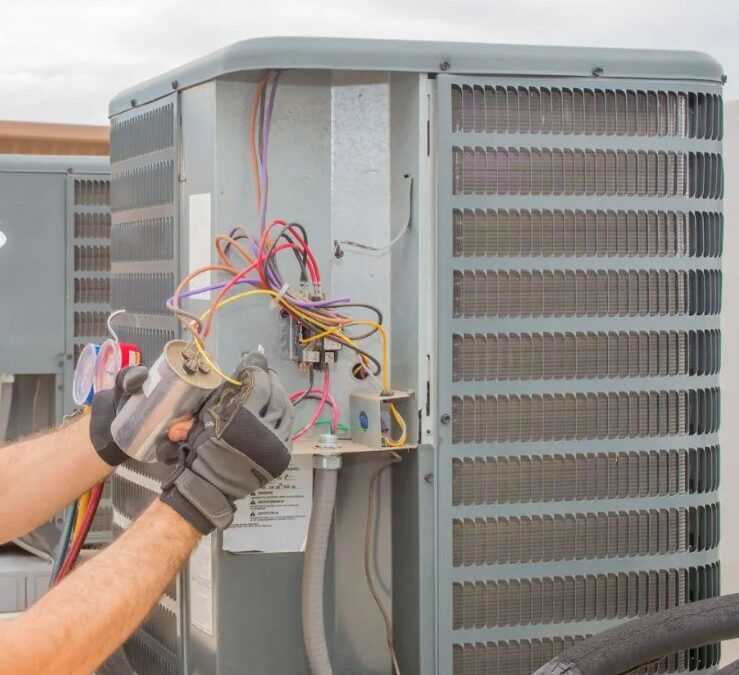
HVAC Capacitors: How to Spot Failure Before It Starts
Is your AC humming but not cooling? The culprit is likely a capacitor—a small component that acts like a battery to jumpstart your system’s motors. When it weakens, your AC struggles, your energy bills rise, and the system can eventually fail.
What is a Capacitor?
Think of a capacitor as a giant battery for your air conditioner. While your home provides a steady flow of electricity, the AC motors need a massive “shove” of power to start spinning. The capacitor stores up electricity and releases it in one powerful burst to kickstart the system. Once the AC is running, it provides a steady secondary flow to keep it spinning efficiently.
Why It Matters to You
When a capacitor starts to fail, your AC has to work twice as hard to do its job. This leads to:
-
Higher Utility Bills: A struggling motor draws significantly more power.
-
Poor Cooling: You might notice the air coming from the vents isn’t as cold as it used to be.
-
System Failure: If the capacitor dies completely, the AC won’t start at all—usually on the hottest day of the year.
Warning Signs to Watch For
Keep an ear (and an eye) out for these red flags:
-
The “Hum”: If you hear a loud humming or buzzing coming from the outdoor unit, but the fan isn’t spinning.
-
Hard Starts: The unit seems to “stutter” or takes several seconds of clicking before it finally kicks on.
-
Visible Damage: If you look at the silver cylinder inside the unit and notice the top is bulging or “domed” rather than flat.
Safety Note: Capacitors store high-voltage electricity even when the power is off. Do not attempt to touch or replace this yourself.
FAQ: Quick Answers
-
Why did my breaker trip? A weak capacitor causes the motor to draw too much power, tripping the breaker to prevent damage.
-
How often should they be tested? Ideally, once a year before the summer heat arrives.
We’re Here to Help
Central Properties Management works with a number of local, well-reviewed HVAC contractors who can diagnose capacitor issues and address any HVAC concerns at your property. If your system is struggling to start, not cooling effectively, or showing any of the warning signs above, contact us and we’ll coordinate a prompt inspection.